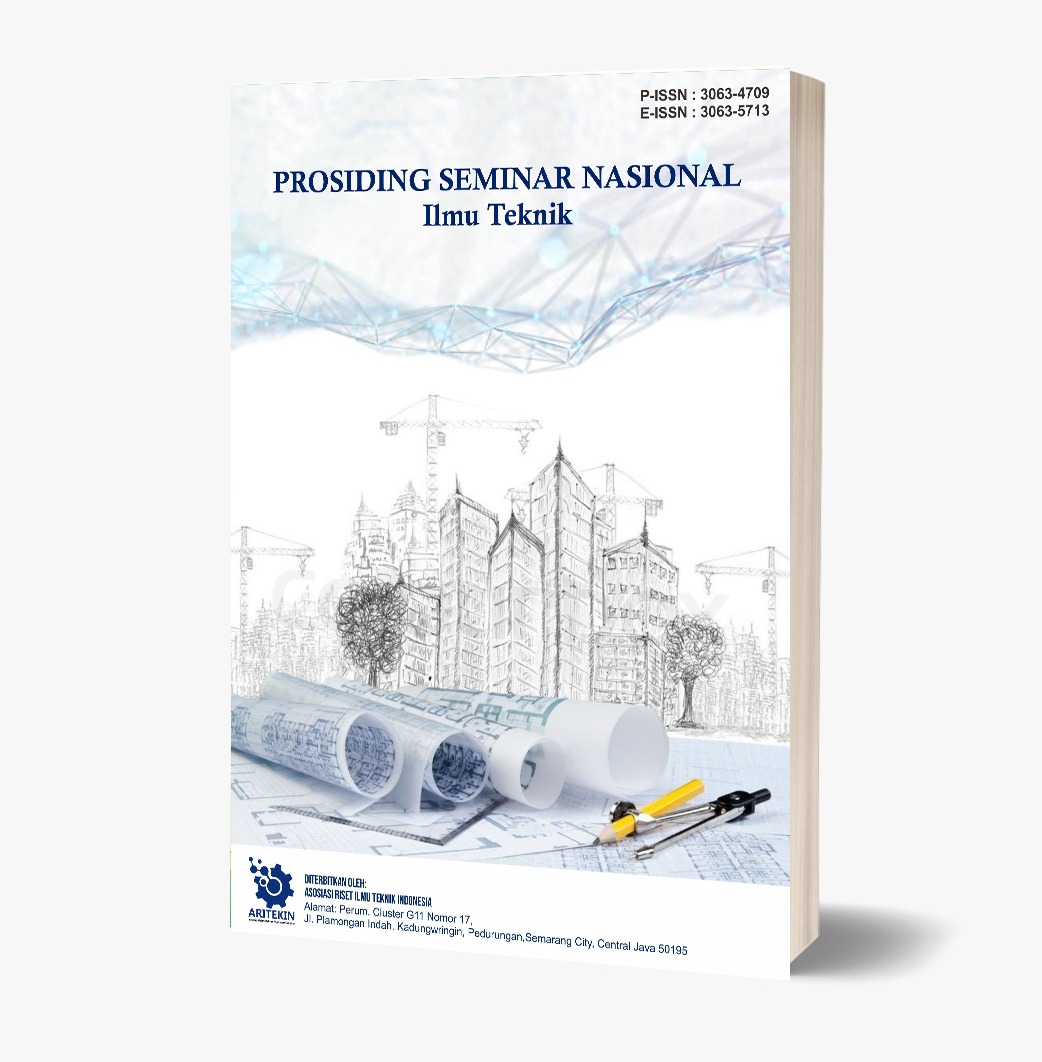
Klasifikasi Penggunaan Daya Listrik Rumah Tangga dengan Menggunakan Metode Naive Bayes
DOI:
https://doi.org/10.61132/prosemnasproit.v2i2.60Keywords:
Data Mining, Classification, Naive Bayes, Power Use, WekaAbstract
Data mining is a technique of several fields of science to find previously unknown relationships in the data warehouse so that it becomes an information that can be used later. The unwise use of electricity will of course have an impact on the high use of electricity, therefore it is expected that every community understands the effort to use electricity wisely. Therefore, authors perform analysis of data mining on these electrical usage data in order to know which is a small, medium and large category. The authors use data on electrical use questionnaire as much as 200 data which is then presented into the ARFF format. In performing author analysis using WEKA Tools. The method used is Naive Bayes classification method with the greatest percentage of accuracy obtained using the Use Training Set Correctly of 80.5%, using a 5-Fold Cross Validation Correctly of 75%, and using 10-Fold Cross Validation amounted to 74%. While the result of the selection of the attributes using the algorithm classifier attribute evaluation (ClassifierAttributeEval) is stated that the most influential attribute against the electrical power usage classification is Electonic Goods.
References
Aggarwal, C. C. (2015). Data Mining: The Textbook. Springer.
Boote, D. N., & Beile, P. (2016). Scholars Before Researchers: On The Centrality Of The Dissertation Literature Review In Research Preparation. Educational Researcher, 45(2), 82–92.
Creswell, J. W., & Creswell, J. D. (2018). Research Design: Qualitative, Quantitative, And Mixed Methods Approaches (5th ed.). SAGE Publications.
Firdaus, F., & Karim, S. A. (2025). Penghematan Dan Penggunaan Energi Listrik Bagi Warga Kelurahan Parang Bugisi Malino. Prosiding Seminar Nasional Pengabdian Kepada Masyarakat.
Hastie, T., Tibshirani, R., & Friedman, J. (2022). The Elements Of Statistical Learning: Data Mining, Inference, And Prediction (2nd ed.). Springer.
International Energy Agency. (2020). World Energy Outlook 2020. IEA.
Kementerian Energi dan Sumber Daya Mineral Republik Indonesia. (2019). Statistik Ketenagalistrikan Indonesia.
Kotu, V., & Deshpande, B. (2019). Data Science: Concepts And Practice (2nd ed.). Morgan Kaufmann.
Parmar, M., Sonker, A., & Sejwar, V. (2023). A Comparative Analysis For Filter Based Feature Selection Techniques With Tree Based Classification. International Journal on Recent and Innovation Trends in Computing and Communication, 11(10s), 360–369.
Sari, L., Alam, S., Surjati, I., & Astuti, P. (2023). Penyuluhan Penggunaan Listrik Untuk Kebutuhan Rumah Tangga Secara Efisien Di Kelurahan Jatibening Baru, Bekasi. Jurnal Pengabdian Masyarakat Teknik, 6(1), 27–32.
Suganthi, L., & Samuel, A. A. (2019). Energy Models For Demand Forecasting---A Review. Renewable and Sustainable Energy Reviews, 33, 434–446.
Tan, P.-N., Steinbach, M., & Kumar, V. (2018). Introduction To Data Mining (2nd ed.). Pearson.
Witten, I. H., Frank, E., Hall, M. A., & Pal, C. J. (2016). Data Mining: Practical Machine Learning Tools And Techniques (4th ed.). Morgan Kaufmann.
Yos, J. K. L., Km, S., & Mulia, T. (2016). Penerapan Data Mining Dengan Metode Klasifikasi Naïve Bayes Untuk Memprediksi Kelulusan Mahasiswa Dalam Mengikuti English Proficiency Test (Studi Kasus: Universitas Potensi Utama).
Downloads
Published
How to Cite
Issue
Section
License
Copyright (c) 2026 Prosiding Seminar Nasional Ilmu Teknik

This work is licensed under a Creative Commons Attribution-ShareAlike 4.0 International License.